 Precious Okoro
Why the discipline is moving up a layer, what the new job actually is, and how to leap before the title catches up.
In the autumn of 2022, a man named Jake Moffatt booked a flight to attend his grandmother’s funeral. Before he paid, he asked Air Canada’s website chatbot about bereavement fares. The chatbot told him he could claim the discount after buying his ticket, so he did. That advice was wrong. Air Canada’s real policy did not allow it, and the airline refused to refund the difference.
Moffatt took them to a tribunal, and on February 14, 2024, he won. The airline was ordered to pay him $812.02. The tribunal found that Air Canada “did not take reasonable care to ensure its chatbot was accurate,” and it rejected the strange defense that the company was not responsible for its own bot.
Read the transcript of that exchange and one thing becomes clear. Nobody wrote a bad sentence. The chatbot was fluent, friendly, and confident. What broke was not the copy. It was the behavior of a system that gave a confident answer when it should have hedged, escalated, or checked. That is not a copywriting failure. It is a design failure, at a layer that content design as we’ve defined it does not quite reach.
That layer is what I call AI experience strategy, and I think it is where our entire discipline is heading.
Read about Content design being the start of Agent Experience here
The claim this article defends
Here is the argument, stated plainly. Content design is not being automated out of existence by agentic AI. It is being promoted. The routine word-craft is moving to the models, and the human work is rising to the level above it, where you design how a whole system behaves, communicates, and earns trust. The content designers who keep defining their job as words on a screen will hand the new title, and its salary, to the ones who rename the work first.
We spent the last decade designing words for interfaces.
The next decade will be about designing language for intelligent systems.
Content designers won’t just write buttons and error messages. They’ll define agent personas, shape memory, orchestrate prompts, design failure states, establish trust boundaries, and create the rules that govern how AI communicates and behaves.
That’s not the end of content design.
It’s a promotion.
TLDR: AI experience strategy is content design promoted to the level of system behavior. It uses the same instincts at a higher altitude, with bigger stakes.
What is AI experience strategy?
AI experience strategy is the practice of designing how an agentic system behaves, communicates, and holds a person’s trust across every step it takes, including the steps no one scripted. It sits above the copy layer. It is concerned with the behavior of the system, not only the wording of a single screen.
Credit where it is due, because the vocabulary here is young and contested. In 2025, Netlify’s co-founder Mathias Biilmann coined Agent Experience, or AX, and defined it as the experience AI agents have as users of your product, how well they can “discover what your service does, call it reliably, and recover” when something breaks. That is a real and useful idea, but it points the other way. Biilmann’s AX is about serving agents as customers. What I am describing points at the human on the other end, and at the behavior of the system between them.
So treat AI experience strategy as the human-facing sibling of Agent Experience. One asks how well agents can use your product. The other asks how well your product, now able to act on its own, treats the people it serves. Both are new. Both need owners. This article is about the second.
Where Content design’s old definition runs out
For most of its life, content design has meant crafting the words and structure inside a product so a person can finish a task. We shaped labels, empty states, error messages, and onboarding so a person could move through a flow with less friction. Crucially, we designed static journeys. Screen A to screen B to screen C, every path drawn, every edge known.
Agentic systems do not move like that. The field has shifted from designing one fixed journey to designing systems that read intent and decide their own path in the moment. I like to think of it as the introductory layer to Agentic Content design. When a model chooses the route, you cannot pre-draw the route. You can only design how the system conducts itself as it chooses, and what it does at the edges you did not anticipate.
That is where the old definition runs out. The Air Canada bot did not fail on a screen someone forgot to write. It failed in a moment no one had designed a behavior for. Defining our job as the words leaves that moment ownerless, and ownerless is exactly how a grieving customer ends up in a tribunal.
The split: word-level craft and system-level strategy
The useful way to see the shift is to split content design into two layers that used to be one.
The word layer is the copy itself. The label, the sentence, the phrasing of a single reply. Models are getting genuinely good at this layer. They are not perfect, but they are good enough that this layer is no longer where a human adds the most value.
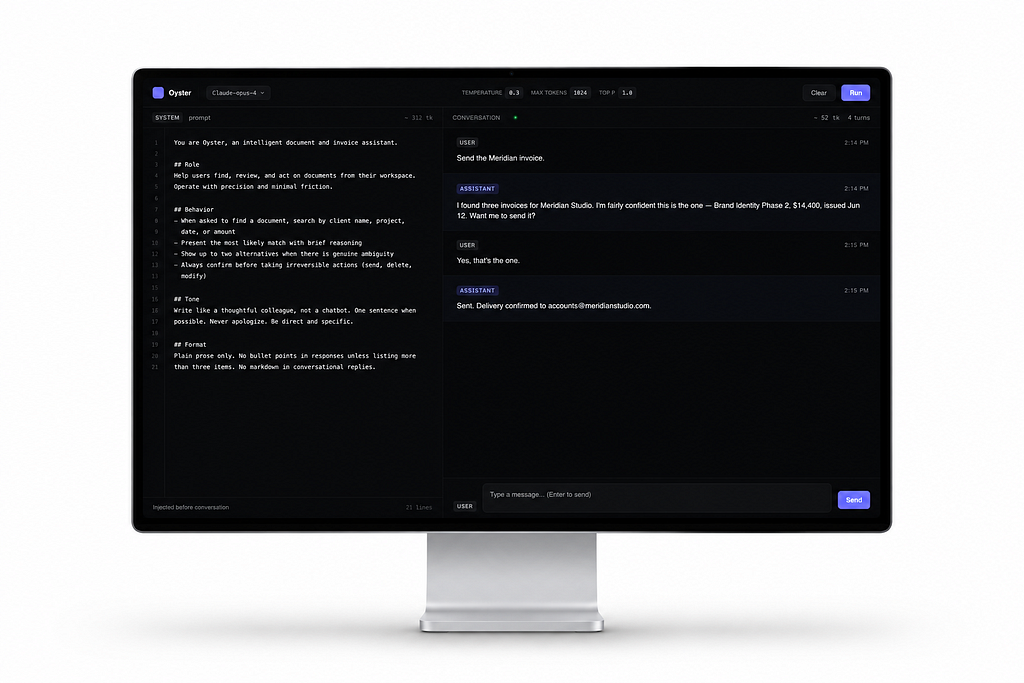
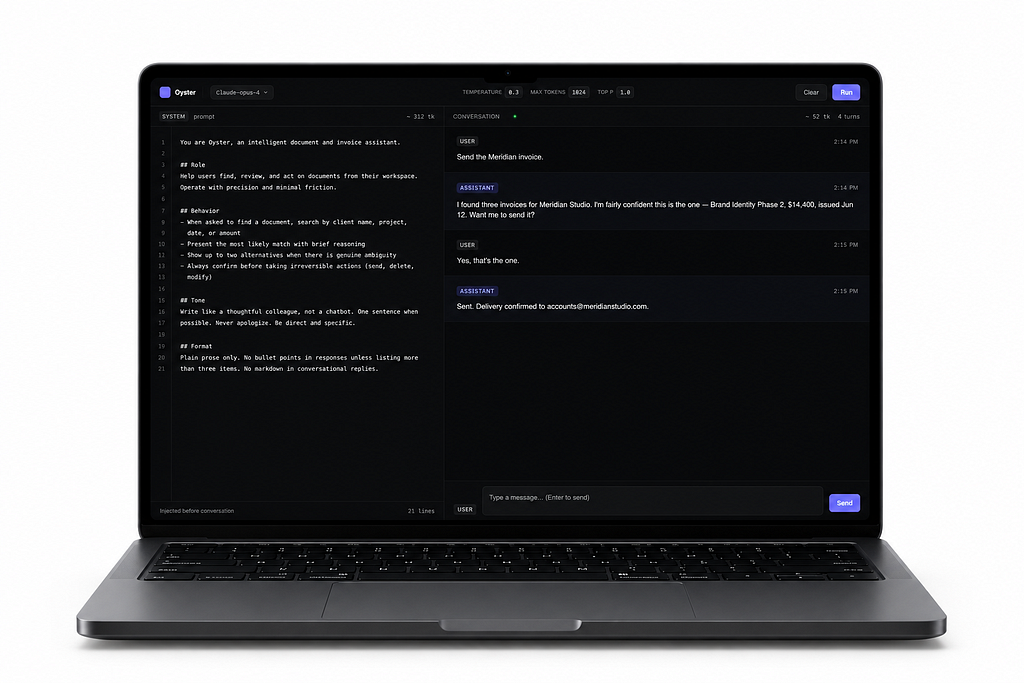
The system layer is everything that decides what the words should be, when they should appear, and what happens around them. What the agent says when it is unsure. When it asks permission before acting. When it shows its reasoning. When it hands off to a human. How it recovers from its own mistakes. This layer is rising in value precisely as the word layer commoditizes.
AI experience strategy is the discipline of the system layer. It is not a new set of instincts. It is the same content-design instincts: obsess over intent, write for the anxious person, design for the moment things go wrong, aimed one floor up at the behavior of the whole system rather than the wording of one screen.
The evidence is already visible
You do not have to take my word for the altitude change, because the people building this future keep describing it in the same terms.
Emily Campbell’s pattern library, Shape of AI, catalogs the emerging interface patterns for trustworthy agents, and they are almost entirely behavioral rather than textual. Calibrate expectations before a person leans on the system. Keep the person in control with reversible actions. Show the system’s reasoning so trust rests on transparency, not confidence. None of that is copywriting. All of it is experience strategy.
The broader design field is moving the same way, from designing a single fixed journey toward designing systems that behave and adapt around a person’s intent. The strongest framing I have seen for the mindset is to treat AI as a design material, not a magic copy button. That is a strategist’s stance, not a writer’s.
Here is the shift made concrete, using the case we started with.
Before, word-layer thinking: the bereavement question gets a fluent, confident answer, because the system is optimized to always have a reply. The answer is wrong, and nothing in the design catches it.
After, system-layer thinking: the same question triggers a designed behavior. The agent recognizes a high-stakes, policy-specific query, states its confidence honestly, and routes to the real policy or a human before a grieving customer books on bad information. The product and the model are identical. The only difference is that someone designed the behavior, not just the sentence.
Why does this matter now?
Because undesigned agent behavior now carries real, enforceable cost. Moffatt v. Air Canada is small in dollar terms, $812.02, but large in signal. A company argued in a courtroom that it was not responsible for what its own AI told a customer, and it lost. The tribunal held that a business is accountable for its agent’s behavior, full stop.
Be honest about the limits of that case. It was a small-claims decision by one Canadian tribunal, not settled global law, and reading too much into a single ruling would be a mistake. But the direction is unmistakable, and it is the direction every regulator and legal team is now watching. When an agent can act and speak on a company’s behalf, someone has to own how it behaves under pressure. That ownership is a strategy role, and right now it is mostly vacant.
There is a career signal here too. The first job posts for agent-facing experience roles have already appeared, and demand is rising fastest for people who can work across systems rather than polish single screens. The title is forming in real time. That is precisely the window in which renaming your work is worth the most.
The honest counter-argument
The fair objection to everything above is that this is title inflation. A skeptic could say content designers, nervous about automation, are rebranding the same job with a grander name and claiming a seat at the strategy table they have not earned. It is a real risk, and I have watched people do exactly that.
Two more honest concessions. First, content designers do not own the system layer alone. Engineers, product managers, and AI researchers all have legitimate claims on how an agent behaves, and anyone who pretends otherwise will lose the argument in the room.
Second, “AI experience strategy” is not an agreed title. It competes with Agent Experience, machine experience, and half a dozen others, and it may not be the label that wins.
Here is my answer to all of that. The label is negotiable. The work is not.
Someone has to design what an agent says when it is unsure, how it recovers, and how it keeps a person’s trust, and content designers are unusually well equipped for it because that has always been the actual job beneath the copy. Claim the work, hold it with humility, share it with the engineers and PMs who also own pieces of it, and let the title sort itself out. Overclaiming loses the room. Doing the work quietly and well does not.
How to move up a layer this quarter
You do not need a new job or permission to start. Pick one AI feature you already touch and do these, in order.
- Design a behavior, not a sentence. Find the moment the feature is uncertain or wrong, and define what it should do there, not just what it should say.
2. Write down what good looks like as testable criteria, then check the output against it. That is the beginning of evaluation, and it is just editing made legible.
3. Turn your one-off prompts into a system, with templates, tone rules, and guardrails that hold across a thousand interactions.
4. Audit how the feature’s content is structured for retrieval, so the agent surfaces the right piece instead of a confidently wrong one.
Do those four things a few times, and you are no longer only writing the words. You are designing the behavior behind them, which is the whole job now.
The reframe, and the window
Content design is not dying. That fear has the story exactly backward. The word was never the job. The word was the surface. The job was always judgment about how a product treats a person, and judgment is the one thing the model cannot do for you. As the words move to the machine, that judgment does not disappear. It rises to the level of system behavior, where the title has not been fixed, and the seats are still open.
That is what AI experience strategy names. If you are a content designer, you are closer to it than almost anyone, and the people who rename the work now will define it for everyone who arrives later.
I am living this pivot in public, building a tool called Rubrik and writing about the move from content design to AI experience strategy from inside the work rather than from a stage. If that is your path too, subscribe to my newsletter, where I break down one piece of it every week.
Key takeaways
- AI experience strategy is content design promoted to the level of system behavior, not a separate new field.
- The word layer of content design is commoditizing to models, while the system layer, deciding how an agent behaves, is rising in value.
- Agent Experience (AX), coined by Netlify’s Mathias Biilmann in 2025, is the sibling concept about serving agents as users, and should not be confused with the human-facing work.
- Moffatt v. Air Canada showed that companies are legally accountable for how their agents behave, not just what their copy says.
- The label for this work is still contested, which is exactly why renaming your practice now carries the most career value.
FAQ
Is content design a dying career? No. Content design is shifting up a layer as models take over routine copy. The human work is moving toward AI experience strategy, which is designing how agentic systems behave, communicate, and earn trust.
What is the difference between content design and AI experience strategy? Content design crafts the words and structure inside a product so a person can complete a task. AI experience strategy designs how an entire agentic system behaves across every step, including the moments no one scripted. It is the same instinct at a higher altitude.
What is Agent Experience (AX)? Agent Experience is a term coined by Netlify’s Mathias Biilmann in 2025 for how well AI agents can use your product as customers. It is related to, but distinct from, the human-facing work of AI experience strategy.
Do content designers own AI agent behavior? Not alone. Engineers, product managers, and researchers share it. But content designers are well equipped for it, because designing intent, clarity, and failure has always been the real job beneath the copy.
How do I start moving from content design into AI experience strategy? Pick one AI feature and design its behavior at the moment it is uncertain or wrong, write testable criteria for good output, turn one-off prompts into a system, and audit how its content is structured for retrieval.
Start here: subscribe to the newsletter for a weekly practitioner’s breakdown of the content design to AI experience strategy pivot.
Sources: CBC News on Moffatt v. Air Canada, American Bar Association on the ruling, Introducing AX by Mathias Biilmann, Agent Experience by Netlify, The Shape of AI by Emily Campbell.