 Precious Okoro
On the gap between how confident AI systems sound and how often they're actually right, and what that means for content and UX design.
Today, I am sharing my latest obsession with you in the AI/UX space: Confidence Calibration.
I know it sounds like something out of Hollywood, but sit tight, you’ll love this if you’re building AI products or looking to break into the space either as a Prompt Engineer, AI Trainer, or AI Content Design leader.
Most AI products are confidently wrong more often than they’re uncertainly right. And that’s a design choice, not a technical limitation.
As AI tools become embedded in everything from customer support to financial analysis, we’re facing a trust crisis that most companies haven’t even identified yet. The problem isn’t that AI makes mistakes. It’s that AI doesn’t know how to communicate when it’s guessing versus when it knows.
This article introduces a concept that will become critical in the next wave of AI product development: confidence calibration.
What Is Confidence Calibration?
Confidence calibration is how well a system’s expressed certainty matches its actual accuracy. In plain English: Does the AI sound as sure as it should be?
When ChatGPT or any LLM generates a response, it’s making probabilistic predictions. But the way it presents that answer, confidently or tentatively, shapes how much we trust it, and what we do with that information.
This matters more than most people realize.
Poor Calibration in Action
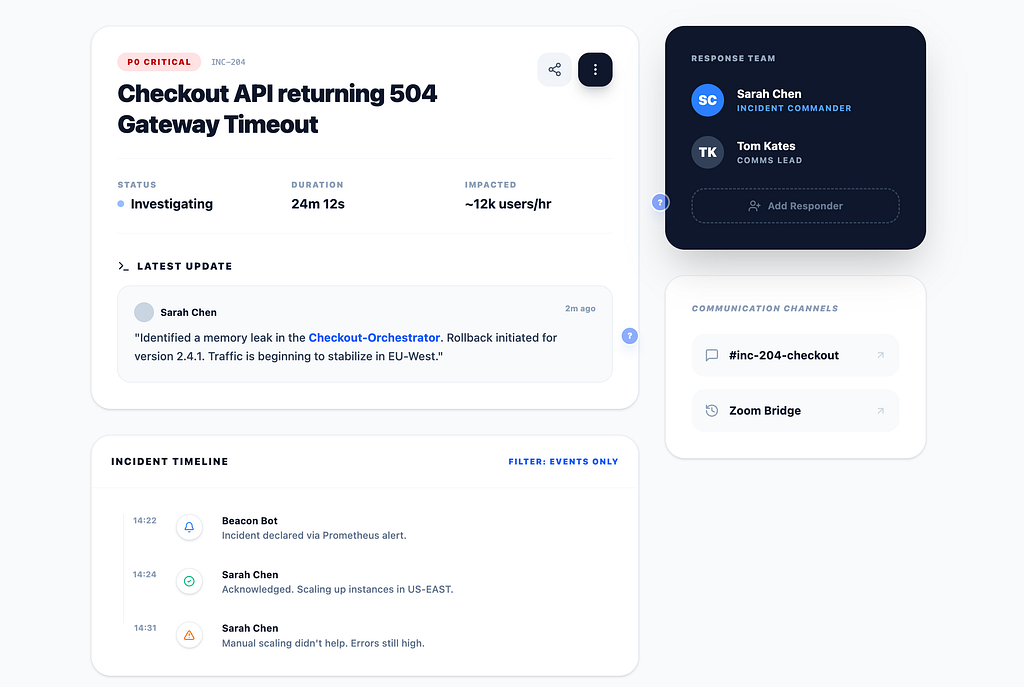
Overconfident AI: The system says, “The capital of Australia is Sydney” with complete confidence. (It’s Canberra. The model is wrong, but sounds certain.)
Underconfident AI: The system says “I think, perhaps, possibly the answer might be” when it actually has high confidence in a correct answer. (Now it sounds incompetent.)
Both scenarios break user trust. One through overconfidence, one through false humility.
What Good Calibration Looks Like
Good calibration matches language to reality:
- “Based on the patterns in your data, you’ll likely see a 15–20% increase, though results vary.”
- “This is a common approach in similar situations, but your context might require adjustments.”
- “I’m less certain here. You’ll want to verify this with your team.”
The language signals the system’s actual confidence level. That’s calibration.
The Four Layers of Confidence Calibration
This is where things get tricky. Confidence calibration isn’t a technical fix you can deploy and forget. It’s a design challenge that shows up in four different ways, and they’re all connected.
Layer 1: System-Level Decisions
- When should the system sound definitive vs. hedge its language?
- What phrases signal “high confidence” vs “moderate” vs “low confidence”?
- How do we calibrate tone differently for customer support vs. financial advice vs. creative brainstorming?
- Should the system ever say “I don’t know” or always provide something?
Layer 2: Context-Dependent Calibration
- A medical diagnosis tool needs a different calibration than a recipe generator.
- Internal enterprise tools can afford more uncertainty than consumer-facing products.
- Real-time applications (live chat) need faster confidence signals than async ones (email drafts)
- High-stakes domains require explicit uncertainty quantification. Low-stakes domains can be more conversational.
Layer 3: User Risk Tolerance Mapping
- Different users have different thresholds for uncertainty
- A startup founder might want bold, confident suggestions to move fast
- A compliance officer needs cautious, hedged language with clear caveats
- How do we design systems that adapt calibration to user personas or even individual preferences?
Layer 4: Legal and Ethical Boundaries
- What happens when confident-sounding AI gives wrong advice that causes harm?
- Who’s liable when the language implied certainty, but the model was guessing?
- How do we balance user experience (people hate wishy-washy answers) with responsible AI (we need to communicate uncertainty)?
- What’s the right calibration for regulated industries where “I think” isn’t good enough?
What Most Companies Get Wrong
They treat confidence calibration as a copy problem. “Let’s add ‘may’ and ‘might’ to sound less certain.”
But bolt-on hedging language doesn’t work. It just makes everything sound uncertain, even when the AI is right.
Real confidence calibration requires a systematic infrastructure:
- Define your confidence taxonomy: What does “likely” mean vs “possible” vs “rare”? Be specific. Does “typically” mean 60% or 90% to your audience?
- Build calibration guidelines: Create clear frameworks for when to use each confidence level across different use cases.
- Test user interpretation: Your internal definition of “probably” might differ wildly from how users interpret it. Test this.
- Create feedback loops: The system needs to learn when it’s been over- or under-confident based on user corrections and outcomes.
- Establish governance frameworks: Who decides calibration standards across your AI products? This can’t be ad hoc.
This is content design infrastructure. Not microcopy. Not tone of voice guidelines. System-level trust architecture that needs to be built before you deploy AI at scale.
Why This Matters Right Now
LLMs are being integrated into high-stakes workflows: hiring decisions, medical summaries, financial analysis, and legal research. Calibration errors in these contexts have real consequences.
If these systems can’t communicate their uncertainty appropriately, one of two things happens:
- Overtrust: People make bad decisions based on hallucinations presented as facts.
- Undertrust: People abandon adoption because everything sounds like a guess.
Neither outcome works. And both are happening right now across the industry.
The Competitive Advantage Hiding in Plain Sight
Most AI products are competing on accuracy. “Our model is 2% better than the competition.”
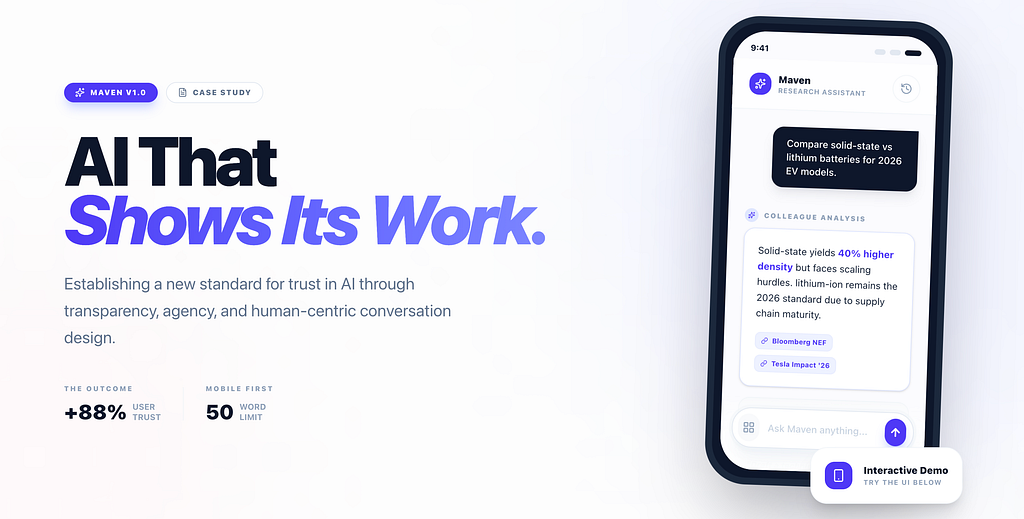
But I’d argue the real differentiation will come from calibration. The companies that help users understand when to trust the AI and when not to will win user confidence and market share.
Think about it:
- A slightly less accurate AI that clearly communicates its uncertainty? Users can work with that. They adjust their decision-making accordingly.
- A highly accurate AI that sounds confident even when hallucinating? That’s a liability waiting to happen. One bad recommendation can destroy trust permanently.
We’re designing for human-AI collaboration, not AI replacement. That means the AI needs to be a reliable partner, and reliable partners admit when they’re not sure.
The Question Every AI Team Needs to Answer
- Who on your team owns confidence calibration?
- Is it engineering? They’ll optimize for accuracy, not communication.
- Is it product? They’ll optimize for adoption, not safety.
- Is it legal? They’ll optimize for risk mitigation, not usability.
- Is it content or design? They’re closest, but do they have the authority and frameworks to make system-level decisions?
Or is no one thinking about this systematically yet?
Because I’m watching companies rush to ship AI features, and almost none of them have answered: “How confident should our AI sound, and who decides?”
The Path Forward
Confidence calibration will become table stakes for AI products. The question is whether your company addresses it proactively or reactively, after a trust incident forces your hand.
Here’s what I recommend:
- Start the conversation now. Bring together engineering, product, content design, legal, and ethics teams. Make confidence calibration an explicit workstream.
- Audit your current AI products. Where is your AI overconfident? Where is it underconfident? What’s the user impact of these mismatches?
- Build your calibration framework. Define your confidence levels, the language that signals each level, and the contexts where each applies.
- Test with real users. Your internal assumptions about confidence language will be wrong. Validate with your actual audience.
- Make it governable. Create clear ownership, decision rights, and review processes for calibration choices.
This isn’t optional work. It’s foundational to building AI products that users can trust and regulators can approve.
The companies that get confidence calibration right won’t just have better AI products. They’ll have users who know exactly when to trust their AI, and that’s worth more than a few percentage points of accuracy improvement.
What frameworks are you using to approach confidence calibration in your products? Who owns this conversation at your company? I’d love to hear how other teams are tackling this.
Well, till I write to you again, have fun!
P.S. Would you like me to write more articles like this? Leave a comment. I read and reply to everyone!